Finding Purpose
I’m at a time of life where, although I’m not yet finished, I can look back on my career in finance. When I reflect, I have been asking myself two questions: “What’s been the point?” and “What’s going to be the point from here on?”
Looking back over my shoulder, I struggle to say that my intentions have always been honourable. If I am honest, I realise that most of my drive came either from a desire to make some money or to establish a measure of social prestige. Not all of the money was for me, it allowed my wife and I to raise our family, put a roof over our heads, and pay for life’s essentials. We could also enjoy life’s comforts, such as holidays, Netflix subscriptions, tickets to the theatre and meals out. Beneath all this was a belief that if I earned enough, then I could escape the daily grind, “stick it to the man” and finally take control of my life.
I now realise that this belief was an illusion. True satisfaction does not come from escaping the systems that govern our lives. The structures shaping how we live – from food production to energy generation, communication, healthcare, construction, and government—are vast and complex. They are beyond any individual’s control. Changes require collaboration and collective effort to achieve sufficient power to shift the dial.
And the truth is that most of the work that I have done has served little to no social purpose whatsoever. I am not alone in that. Studies suggest that more than a third of us doubt that our work has any social value, and only around half find our jobs meaningful. But what if we could change this?
This theme has been taken up by the Dutch academic, Rutger Bregman, in his recent book, Moral Ambition. He asks why, in a world facing immense challenges, from global warming, inequality and the threat of nuclear war, so many bright and talented people are wasting their time working in socially useless jobs? Finance, consulting and the law – the so-called “Bermuda triangle of social purpose” – provide the most lucrative careers with little social impact.
While not all the work in these professions is completely useless, surely there is a better way for people to earn a living and contribute to society than helping organisations increase their profits, create “shareholder value” or help the rich avoid tax? Wouldn’t it be good if, instead of chasing profits or prestige, our brightest minds were rewarded for solving humanity’s toughest challenges: making life bearable for the vulnerable, liveable for future generations, and dignified for everyone in between.
To that end, Rutger has co-founded a university: the School for Moral Ambition whose mission is to help as many people as possible take the step towards a job with a positive impact. While I’m not about to return to full-time education, I have been inspired to learn more about the opportunities that exist right here in Scotland to work with people contributing to make a better world. Encouragingly, there’s a lot going on.
Pockets of Purpose in Scotland
Beyond the expected charities, I’ve discovered a vibrant network of social enterprises (businesses that reinvest their profits to work towards a specific social or environmental mission) and other supportive organisations forming an ecosystem dedicated to positive change and reshaping our systems. A few examples of those trying to build a better world include:
- Community Transport organisations, like South Ayrshire Community Transport, providing essential mobility for older people and those with disabilities where public services fall short.
- Friends of the Earth Scotland, Stop Climate Chaos and other environmental organisations campaigning for climate action and a fairer distribution of the planet’s resources.
- Genders in Emergency Group training international aid workers to integrate gender equality, making their interventions more effective.
- Impact Arts and RIG Arts using creativity to improve the lives of vulnerable people, increasing access to skills that lead to employability and organising services that build communities.
- Inspiring Scotland is a venture philanthropy group using entrepreneurial principles to raise funding, generate new ideas and connect professional expertise with voluntary organisations tackling deep-rooted social issues.
- Social Investment Scotland offering loans and business support to social enterprises, charities and community groups.
And these are just a handful. The truth is, there are countless organisations like them, led by passionate people who desperately need help to plan, manage, and grow. Many are small, often under-resourced, and in dire need of skills that people like you, with financial and management experience, can offer.
Business as a Force for Good
Of course, you don’t have to work for a not-for-profit to make a difference. Commercial enterprises can also adopt models that balance profitability with purpose. A good starting point is to follow the principle of ‘Do no harm’. Spend time mapping your organisation’s impact against the UN Sustainable Development Goals to understand where it is having a positive and negative impact. Then take responsibility to build on the positives and reduce the negatives as a strategic priority.
Another route is to become a B Corp—a certification that recognises businesses meeting high standards of social and environmental accountability. More than a badge, it signals a shift: business as a force for good. As B Lab, the certifying body, puts it: they won’t stop until all business is a force for good, so it would be a good idea to sign up soon.
A Personal Turning Point
I fully appreciate the necessity of making a living—to clothe, feed, and shelter ourselves and our families. But in Scotland, a relatively affluent society, many of us are lucky enough to have choices about how we do this. We can find work that pays the bills and leaves room for meaningful contribution—whether through our careers or in the time we give outside of them.
As I write this, summer is fading into autumn. The world feels precarious: global warming and environmental decline, wars and international tension, the rise of extremists, Hibs crashing out of Europe once again. Yet, it does not have to be this way. Our future is not yet written. We still have time to bend the long arc of the moral universe toward justice.
I wish I had sought social purpose earlier in my career. I believe I could have lived a more fulfilling life. The good news is, I’m beginning to find that purpose now. And it’s not too late—for me, or for you.
If you want to join me on this journey or simply want to explore this topic, please feel free to get in touch, or take a look at any of the links provided above.
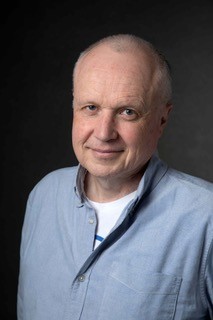
Thank you to Robin Aitken for writing this for iMultiply.
Robin Aitken is the founder of Bellevue Partners and a seasoned finance professional with nearly four decades of experience in management and finance. Known for his creative approach and deep interest in the people behind the numbers, Robin is often told he doesn’t “seem like a finance guy”—a reflection of his human-centred style and passion for collaboration.
Robin began his career as a trainee chartered accountant with Arthur Andersen before joining the BBC in 1991, where he rose to senior management. In 1998, he transitioned into the entrepreneurial world, working with growing businesses across a wide range of sectors. His career has been marked by a unique blend of analytical rigour and creative engagement, including roles such as Finance Director of a sports start-up floated on AIM, leading a private equity-backed MBO of a data business, and even joining the musical collective Africa Express on a cross-country train tour.
In addition to his consultancy work, Robin has been a visiting lecturer at the University of Bath for over a decade, specialising in Finance and Entrepreneurship. He is also a qualified coach, having completed ICF-accredited training, and provides mentoring and coaching to individuals and organisations seeking clarity, resilience, and purposeful growth.